Charging · Buying in bulk
Rectifier problems on a CD 70 or CG 125: signs, checks and replacement
In short
If a bike keeps flattening or boiling its battery, or blowing bulbs, the rectifier is the first suspect. Check the battery and the charging coil first, then replace the rectifier with one that has the same lead layout and a finned metal body that can shed heat. Fit the new rectifier before a new battery, or the new battery will be damaged too.
- Flat or boiling batteries and blown bulbs usually point to the rectifier.
- Test the charging coil too. A weak coil gives the same symptoms.
- Replace a faulty rectifier before fitting a new battery.
- Match the lead colours and connectors so no cutting is needed.
What a rectifier does
The charging coil behind the left engine cover makes AC power as the engine turns. The battery needs DC. The rectifier converts AC to DC, and on most bikes it also limits the voltage so the battery is not overcharged.
When it fails it can stop charging, so the battery goes flat, or it can stop limiting, so the voltage climbs and bulbs and the battery are damaged.
Signs of a bad rectifier
- The battery goes flat after a few days even though it is new.
- The battery boils and needs topping up with water often.
- Headlight and indicator bulbs blow again and again.
- Lights get much brighter when you rev the engine.
- The rectifier body is too hot to touch after a short ride.
Check these first
- Battery. Charge it fully and see if it holds. An old battery with a dead cell causes the same complaints.
- Connections. Look for loose, burnt or corroded bullet connectors at the rectifier and battery.
- Charging coil. A mechanic can test the coil’s output with a multimeter. If the coil is weak, a new rectifier will not help.
- Earth wire. A poor earth to the frame causes strange charging faults that look like a bad rectifier.
Tip: Measure battery voltage with the engine at a fast idle. If it climbs well above normal charging voltage, the rectifier is not limiting and should be replaced.
Choosing a replacement
Match the lead layout
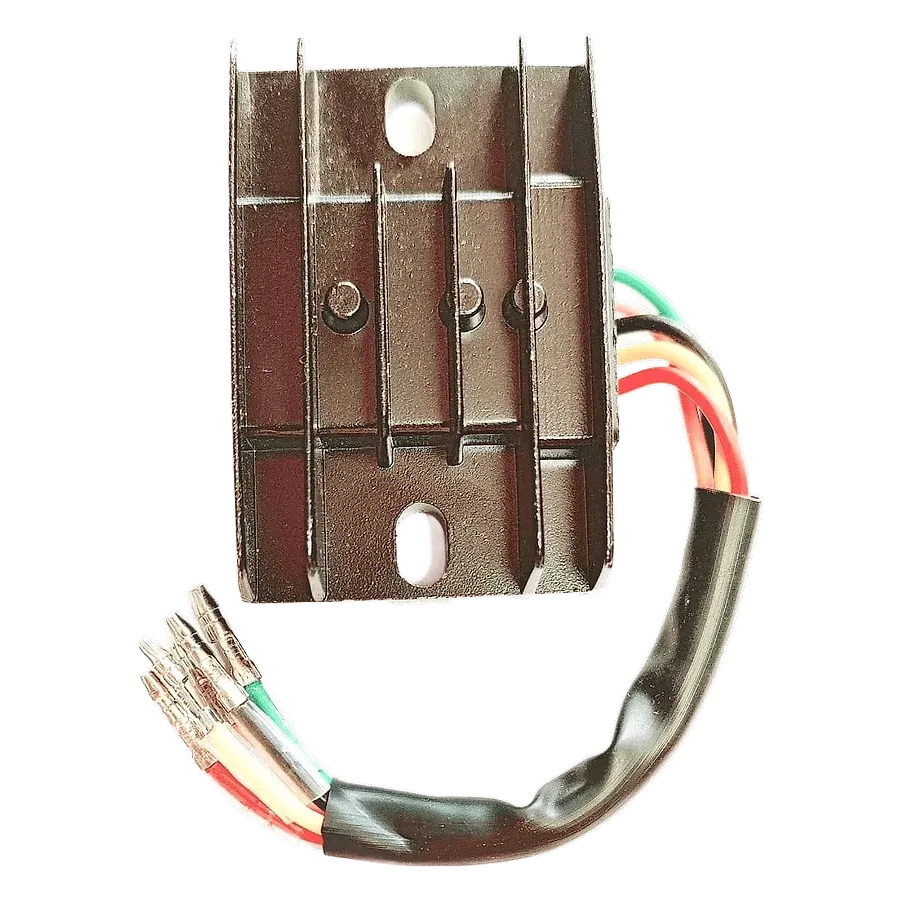
Check the number of wires and their colours on the old unit. A rectifier with the right lead colours and bullet connectors plugs straight in. Cutting and joining wires leads to faults later.
Look for a finned metal body
Rectifiers make heat. A finned aluminium body gets rid of it. Thin plastic bodies run hot and fail sooner, especially in summer traffic.
Fit it in the right order
Watch out: If the old rectifier was overcharging, fit the new rectifier first, then the new battery. A new battery on a bad rectifier can be ruined within weeks.
For dealers
- Stock rectifiers by engine size and lead layout, not only by bike name.
- Sell them with a battery check. Customers who come in for a battery often need a rectifier too.
- Ask the supplier how each batch is tested. Rectifiers should be tested under load, not just checked for continuity.
Not sure which one you need?
Send a photo of the old rectifier and its plug on WhatsApp and we will tell you which one fits.